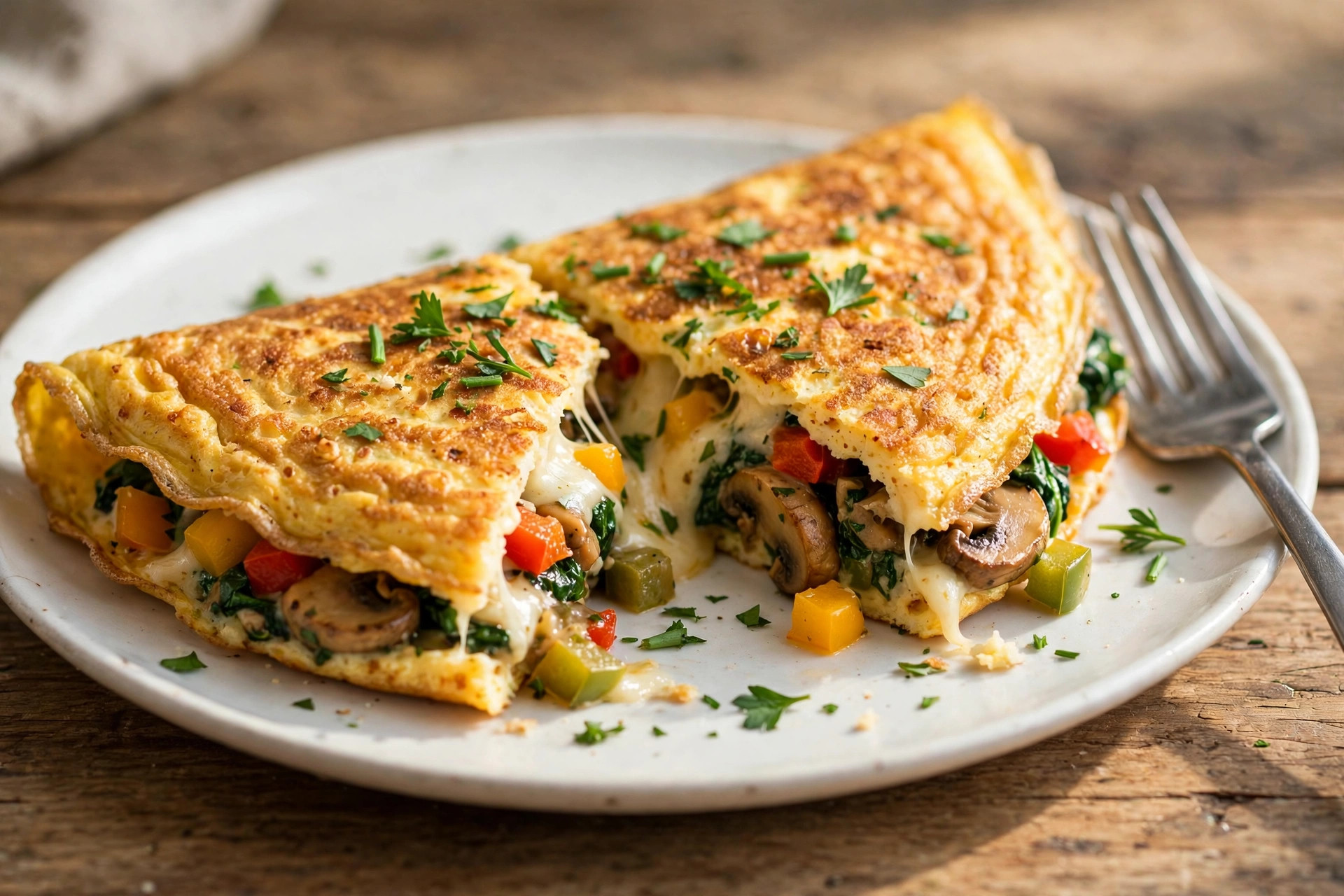
Learning to build your own omelette is one of the highest-value skills in home cooking: three eggs, a hot pan, and five minutes stand between you and a meal that works for breakfast, lunch, or a lazy dinner. The real joy is customisation — once the base technique is solid, every omelette becomes a blank canvas for whatever is in your fridge. This guide covers the perfect egg base, a mix-and-match filling station with 25 ideas, the folding technique, and the mistakes that turn a great omelette rubbery.
The perfect omelette base
Start with two or three eggs per person — three gives a generously filled omelette, two keeps things lighter. Crack them into a bowl with a pinch of salt and a grind of black pepper, then whisk with a fork until the yolks and whites are fully combined and slightly frothy. A splash of milk or cream (about a tablespoon per two eggs) makes the texture more tender, though purists often skip it. Heat a small non-stick frying pan over medium heat, add a knob of butter or a teaspoon of oil, and wait until it foams and just starts to smell nutty — that's the moment to pour in the eggs. Too cool and the omelette steams instead of setting; too hot and the bottom browns before the top cooks.
Setting up the filling station
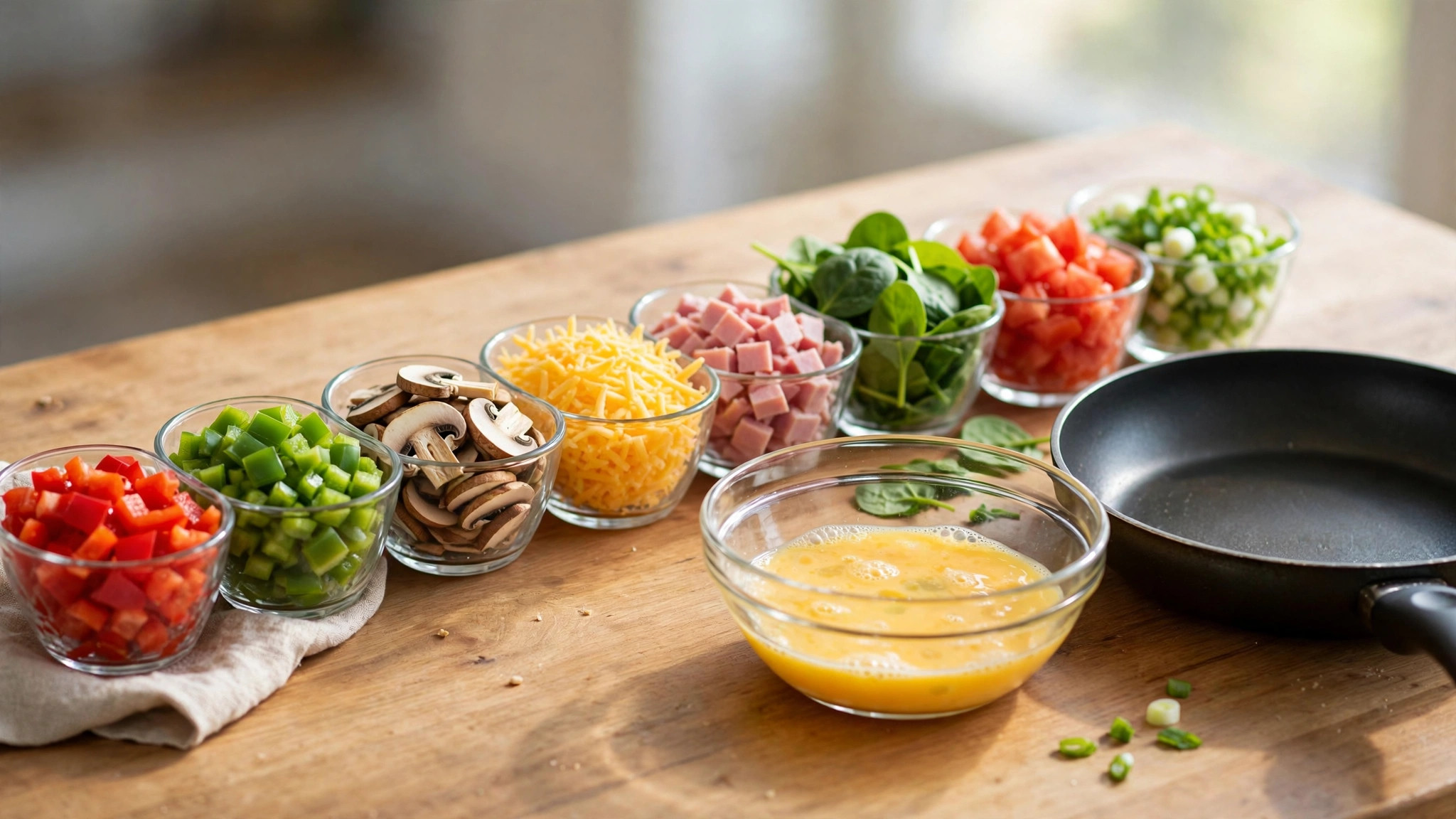
The secret to a great custom omelette is mise en place: every filling chopped, grated, and within arm's reach before the eggs hit the pan. Fillings fall into four groups, and the winning formula is one or two from each. Pre-cook anything raw and watery — mushrooms, peppers, onions, and spinach all release moisture that will make your omelette soggy if added raw. Leftover cooked meats and vegetables are ideal here, which is why omelettes are the ultimate fridge-clearing meal. For more meals built on a handful of components, browse our 10-ingredient recipes.
The filling station: 25 mix-and-match ideas
Proteins (pick 1): diced ham, crumbled cooked sausage, shredded leftover chicken, smoked salmon, crispy bacon bits, tinned tuna, or — for a desi twist — crumbled chapli kebab.
Vegetables (pick 2): sliced mushrooms, diced red and green peppers, baby spinach, chopped tomatoes, sliced spring onions, sweetcorn, grated courgette (squeeze out the water first), roasted red peppers from a jar, or leftover roast vegetables.
Cheeses (pick 1): grated cheddar, crumbled feta, mozzarella for maximum melt, parmesan for sharpness, or cream cheese dollops for richness.
Herbs and extras (pick 1–2): chopped chives, fresh coriander, basil, a spoonful of salsa, sliced jalapeños, a drizzle of chilli oil, or caramelised onions for sweetness.
Classic combinations to try first: ham, cheddar, and mushroom; spinach, feta, and tomato; smoked salmon, cream cheese, and chives; or the full desi breakfast — chapli kebab crumble with green chillies and coriander.
The folding technique, step by step
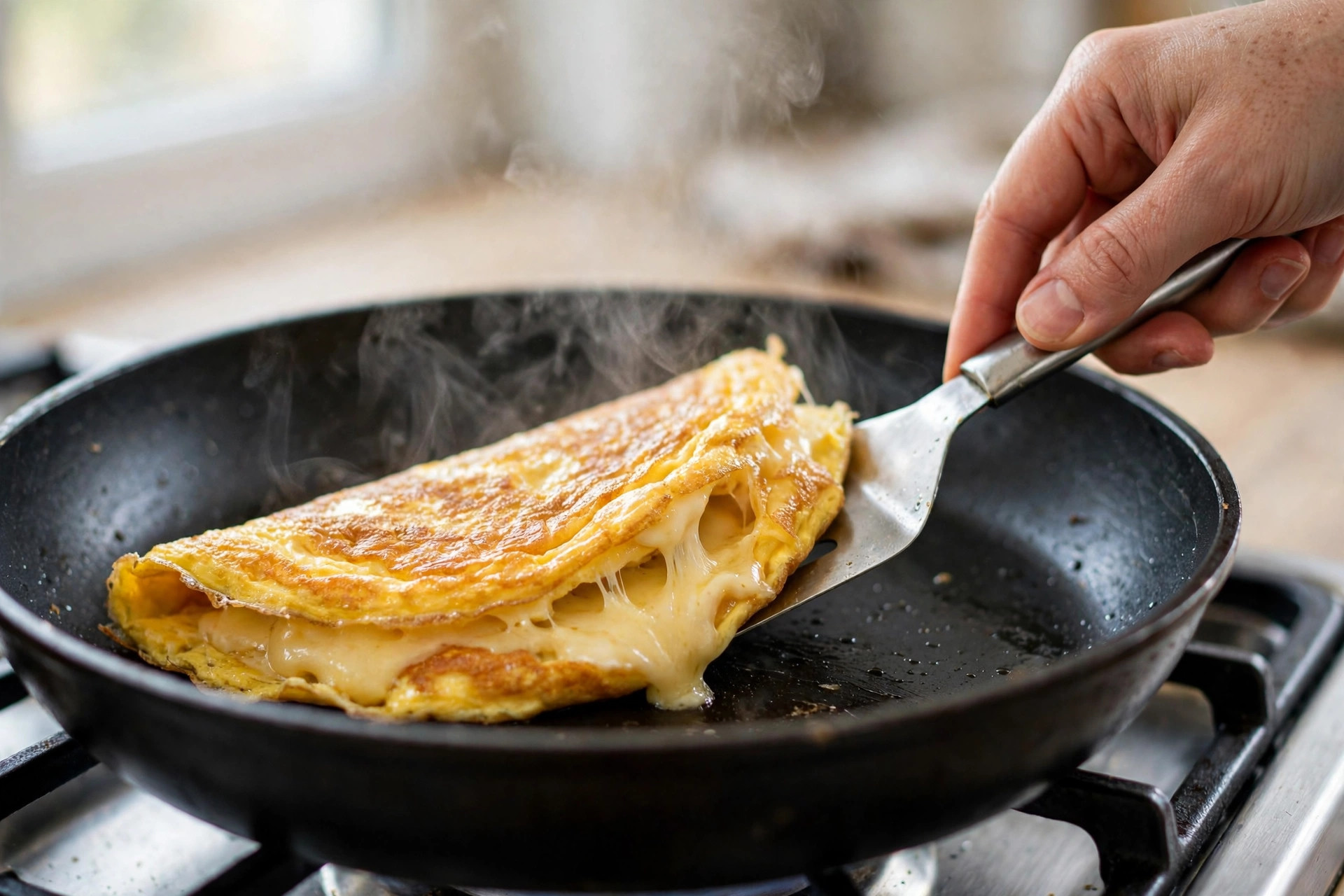
Pour the whisked eggs into the hot, buttered pan and swirl to coat the base. As the edges begin to set (about 30 seconds), use a spatula to gently pull the cooked edges toward the centre, tilting the pan so raw egg flows into the gaps. Repeat two or three times until the top is just barely set but still glossy — this takes about two minutes total. Scatter your fillings over one half of the omelette, then slide the spatula under the empty half and fold it over. Let it sit for 20 seconds so the cheese melts, then slide the whole thing onto a warm plate. The residual heat finishes the cooking, so always pull the omelette off the heat while it still looks slightly underdone — it will be perfect by the time it reaches the table.
Feeding a crowd? Try the bag method
When everyone wants a different omelette, the classic pan method becomes a bottleneck. That's where Allrecipes' omelet-in-a-bag method shines: each person adds their chosen fillings to beaten eggs in a freezer bag, the bags go into boiling water for 13 minutes, and everyone eats at the same time. Reviewers love it for camping trips and picky eaters alike — proof that the build-your-own concept works however you cook it.
Mistakes to avoid
Overfilling. More than a small handful of fillings per omelette and it won't fold — be disciplined.
High heat. Brown, crispy-bottomed omelettes are overcooked omelettes; medium heat and patience win.
Adding salt too early to the eggs. A pinch is fine, but heavy salting before cooking can make eggs watery — season lightly, then adjust at the table.
Raw watery vegetables. Mushrooms, spinach, and courgette must be pre-cooked or your omelette will weep.
Walking away. An omelette goes from perfect to rubbery in under a minute — stay at the stove.
Omelettes beyond breakfast
Don't file this technique under breakfast only. A well-built omelette with a side salad is one of the fastest proper dinners in existence — it belongs on any list of 25 dinner ideas for busy weeknights. Scale it up into a baked frittata for guests, roll it into wraps for lunchboxes, or serve a Spanish-style tortilla thick with potato as a weekend project. Once you can build your own omelette without thinking, you've unlocked a meal for every occasion — all from a few eggs and whatever the fridge offers.