An enamelled dutch oven can last for decades — but only if you treat its glassy coating kindly. Learning how to clean enamel cast iron properly takes five minutes to understand and saves you from chips, stains and dull patches that no amount of scrubbing will fix later.
What Enamel Cast Iron Actually Is
Under the colourful coating sits plain cast iron. The enamel is essentially glass fused onto the metal at high heat, which means it will not rust and does not need seasoning like raw cast iron. But glass can chip, crack and stain — so the cleaning rules are the opposite of the "scrub it hard" approach many people use on stainless steel.
Everyday Cleaning Routine
For normal use, gentle is all you need:
- Let it cool first. Never plunge a hot pot into cold water or fill it with cold water — thermal shock can crack the enamel. Wait until it is warm, not sizzling.
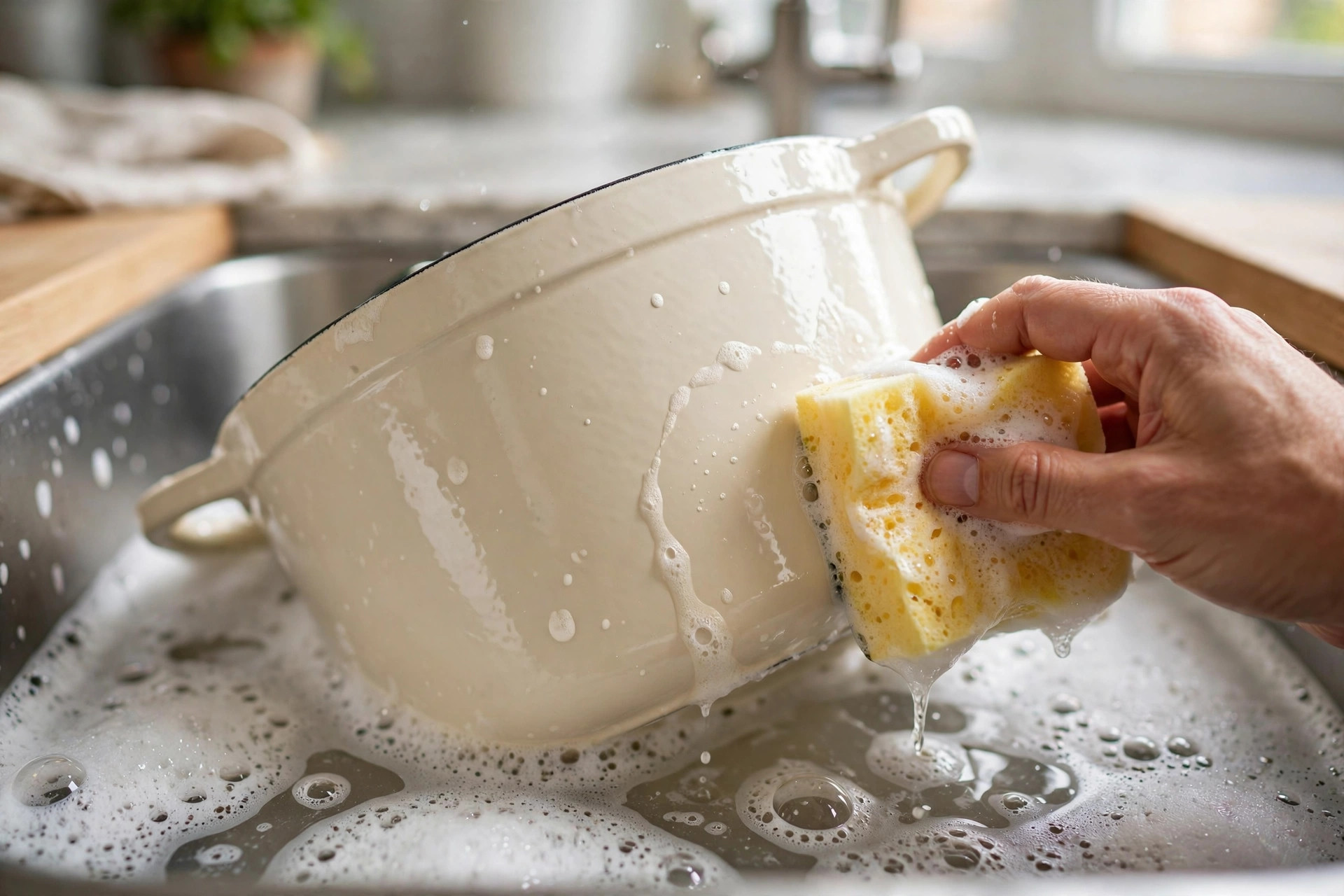
- Wash with warm, soapy water. A soft sponge or non-metal brush and ordinary washing-up liquid are perfect. The smooth surface releases food easily.
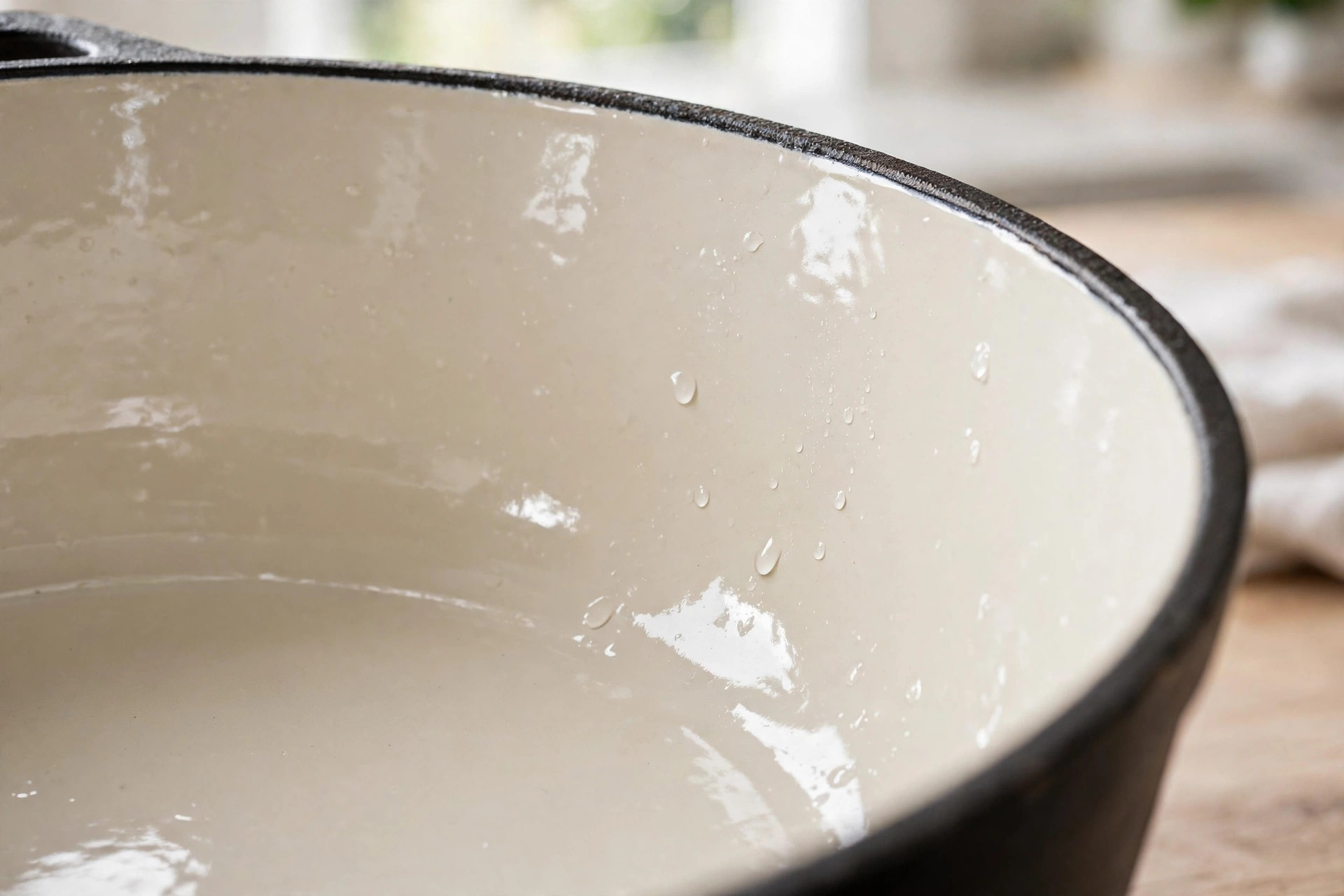
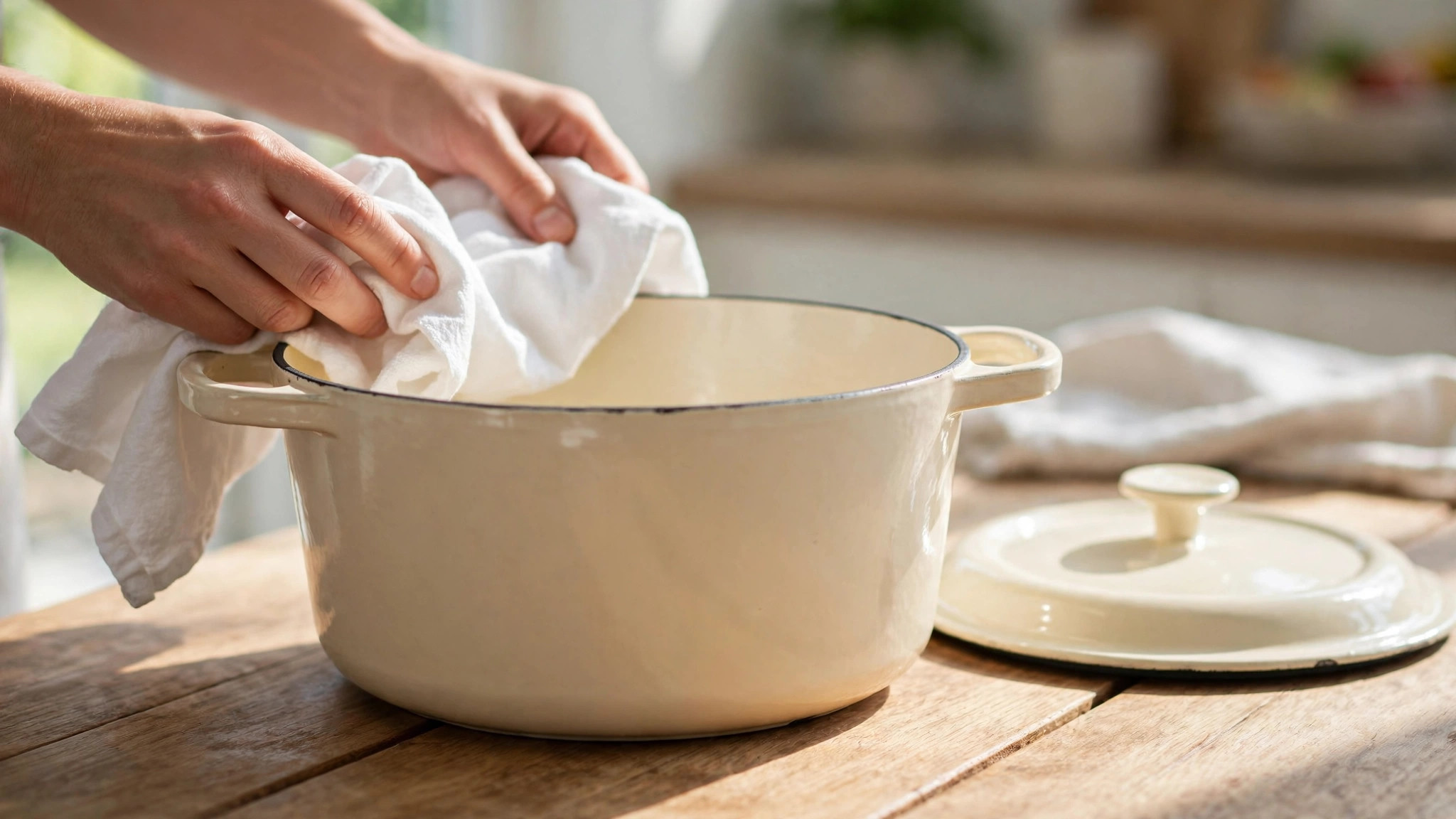
- Rinse and dry thoroughly. Towel-dry the pot rather than leaving it to air-dry, especially around the rim where the iron edge is exposed and can develop surface rust.
Dealing with Stuck-On Food
For food that will not budge with a sponge, fill the pot with warm water and leave it to soak for 15 to 20 minutes — manufacturers including Le Creuset recommend exactly this before reaching for anything stronger. A nylon brush or non-scratch scouring pad will then lift the residue without harming the coating. If you cook sticky dishes like haleem often, our guide on why haleem sticks to the pot will help you prevent the mess in the first place.
Burnt Residue Rescue
For a scorched bottom, make a paste of bicarbonate of soda and water, spread it over the burnt area and leave it for a few hours or overnight. Then simmer plain water in the pot for a few minutes and the residue should lift with a soft sponge. For stubborn brown stains, a soak with a specialist enamel cleaner (the type sold by the cookware brands themselves) works well. And if the damage is to dinner rather than the pot, our burnt biryani fixes can still save the meal.
What Never to Do
- No metal scourers or steel wool. They scratch through the enamel to the iron beneath.
- No harsh abrasive powders or oven cleaner. They dull and etch the glossy finish.
- No thermal shock. Hot pot plus cold water equals cracked enamel — the single most common way these pots die.
- No dry heating on high. Enamel cast iron holds heat so well that high flames scorch food and can damage the coating; medium and low heat are plenty.
- No dishwasher reliance. Most enamelled pots are technically dishwasher-safe, but repeated cycles dull the finish over time — hand washing keeps it looking new.
Drying and Storing
Always dry the pot completely before putting it away, and store it somewhere dry rather than in a steamy cupboard. If you stack other pans inside it, slip a cloth or pan protector between them to prevent chipping. Check lid knobs and handles now and then and tighten them if they loosen — a wobbly knob is an accident waiting to happen.
When to Worry (and When Not To)
A few things are normal: light staining on pale interiors, tiny utensil marks, and a patina that builds up with use. None of these affect cooking. What does matter is chipped enamel that exposes bare iron — small chips on the exterior are cosmetic, but chips inside the cooking surface can grow, and at that point it is worth contacting the manufacturer about your options. Slow-cooked dishes like our nihari recipe are exactly what these pots are made for, so keep cooking — just clean kindly afterwards.
For the full manufacturer guidance this advice is based on, see Le Creuset's official cast iron care and use guide. Treat your enamelled pot gently and it will reward you with decades of stews, curries and slow Sunday cooking.