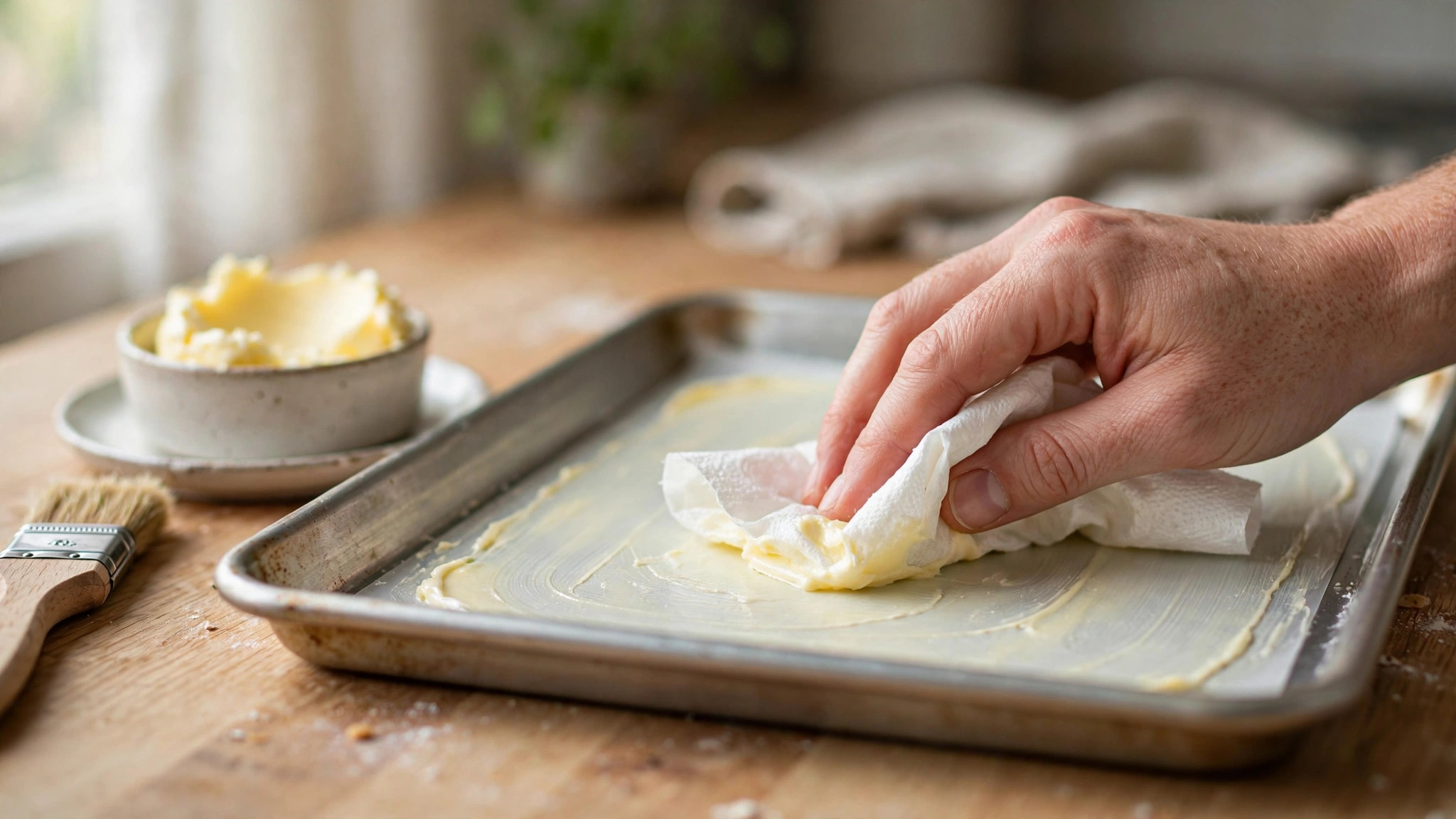
Knowing how to grease a cookie sheet properly is the difference between cookies that slide off in perfect rounds and cookies you have to chisel off with a spatula. It sounds trivial until a batch of beautiful biscuits fuses itself to the pan. The good news: there are five reliable methods, each suited to different bakes — and one clear winner for most situations. Here's how each works, when to use it, and the mistakes that cause sticking in the first place.
First: do you even need to grease?
Not always. Many modern cookie recipes contain enough butter that the dough releases on its own, and greasing when the recipe doesn't call for it can make cookies spread too thin. As Quaker Oats' cookie baking tips advise: grease the sheet only if the recipe directs you to. Their guidance is simple — use a paper towel to apply a thin layer of shortening, or give the pan a light spray of no-stick cooking spray. Thin is the operative word: a thick slick of fat fries the bottoms of your cookies rather than just releasing them. Also note that dark, non-stick sheets bake hotter and faster than light aluminium ones, so reduce the oven temperature slightly or shorten the time when using them.
Method 1: butter
The classic. Take a tablespoon of softened (not melted) butter and rub it over the sheet with a paper towel or your fingers, covering the surface in a thin, even film. Butter adds a lovely flavour to the bottoms of biscuits and is ideal for shortbread, sugar cookies, and anything where buttery crispness is the goal. The downside: butter's milk solids can brown or burn at high temperatures, so it's best for bakes at 180°C and below, and for doughs that bake quickly.
Method 2: neutral oil
A teaspoon of vegetable or sunflower oil, spread thin with a paper towel, does the same job as butter without the burning risk — useful for hotter bakes. Use a light hand: pooled oil makes cookies greasy underneath. A pastry brush gives the most even coverage, getting into the corners and up the rim where dough loves to catch.
Method 3: cooking spray
The fastest option — a quick, even mist across the sheet takes two seconds. Cooking spray is brilliant for intricate shapes like madeleines or for big-batch baking when you're greasing multiple sheets. Two cautions: spray away from the hob (it's flammable), and over time, spray residue can build into a sticky polymer layer on your pans that's hard to remove. Wash sheets promptly after baking to prevent the build-up.
Method 4: grease plus flour
For cakes and bar bakes rather than cookies: grease the pan, then dust with flour and tap out the excess. The flour creates a dry barrier between batter and metal that releases beautifully. Cocoa powder works the same way for chocolate bakes (and avoids the white floury residue). This method is overkill for drop cookies, but essential knowledge for any baker's repertoire.
Method 5: parchment paper (the gold standard)
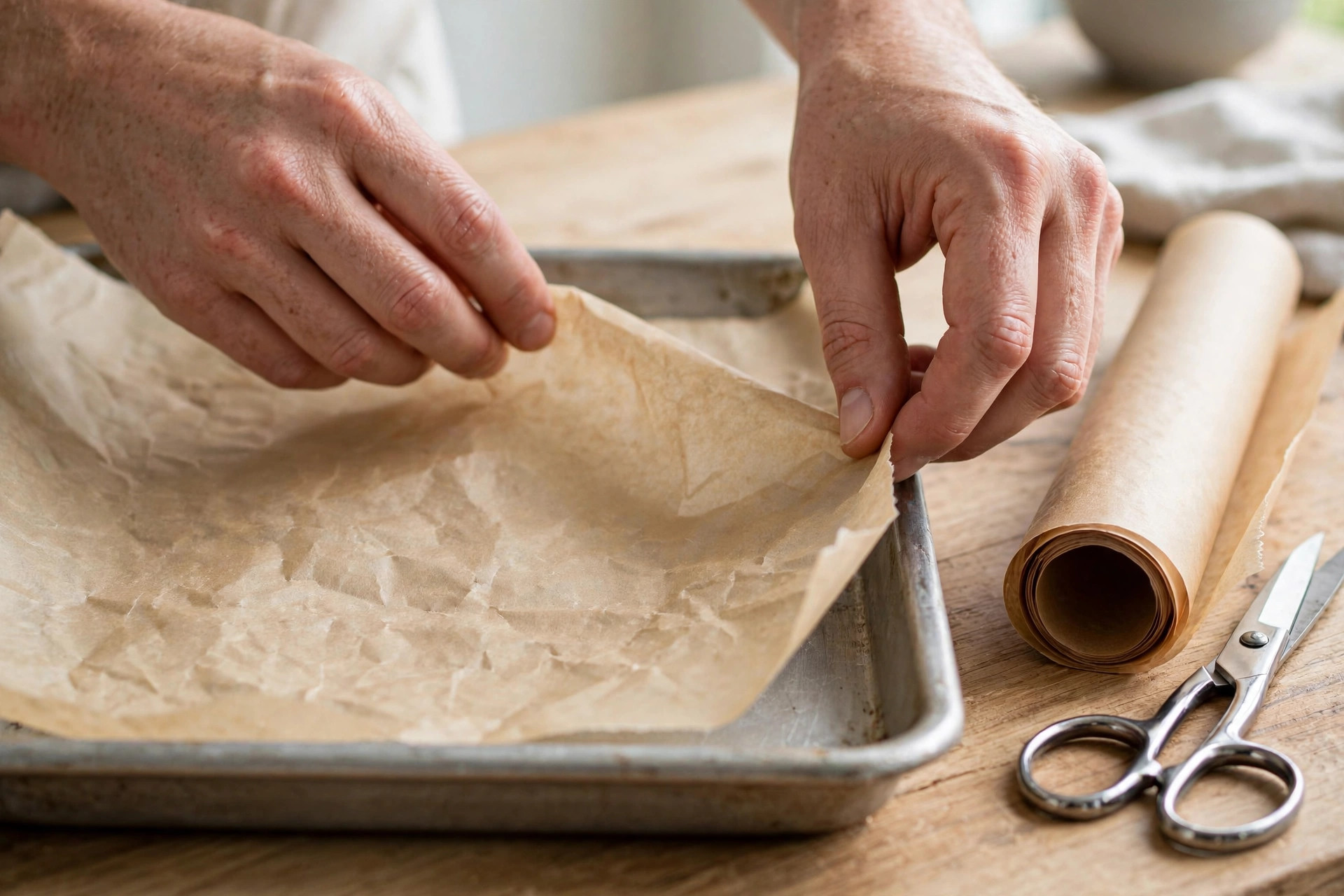
For cookies, parchment paper beats every greasing method. Nothing sticks to it, there's zero added fat to affect spread, and clean-up is literally lifting the paper off the sheet. Cut it to fit or use pre-cut sheets, and let the edges curl slightly up the sides. It's also reusable for two or three batches of the same bake. Foil lined and sprayed — as in Allrecipes' baking sheet pancakes, where the pan is lined with foil then greased with cooking spray — is the heavy-duty alternative when parchment isn't to hand, and reviewers confirm the bake lifts off cleanly with easy washing-up.
Common greasing mistakes
Too much fat. A thick layer doesn't release better — it fries the bottoms and makes cookies spread into thin crisps.
Greasing when the recipe says not to. High-fat doughs on a greased sheet spread excessively; trust the recipe.
Reusing a sheet without re-prepping. Crumbs and residue from batch one will glue batch two down. Wipe or re-line between batches.
Using butter on very hot bakes. Above 190°C, butter's milk solids scorch — switch to oil, spray, or parchment.
Forgetting the rim. Dough creeps; grease or line right up to the edge, especially for bar cookies.
Which method for which bake?
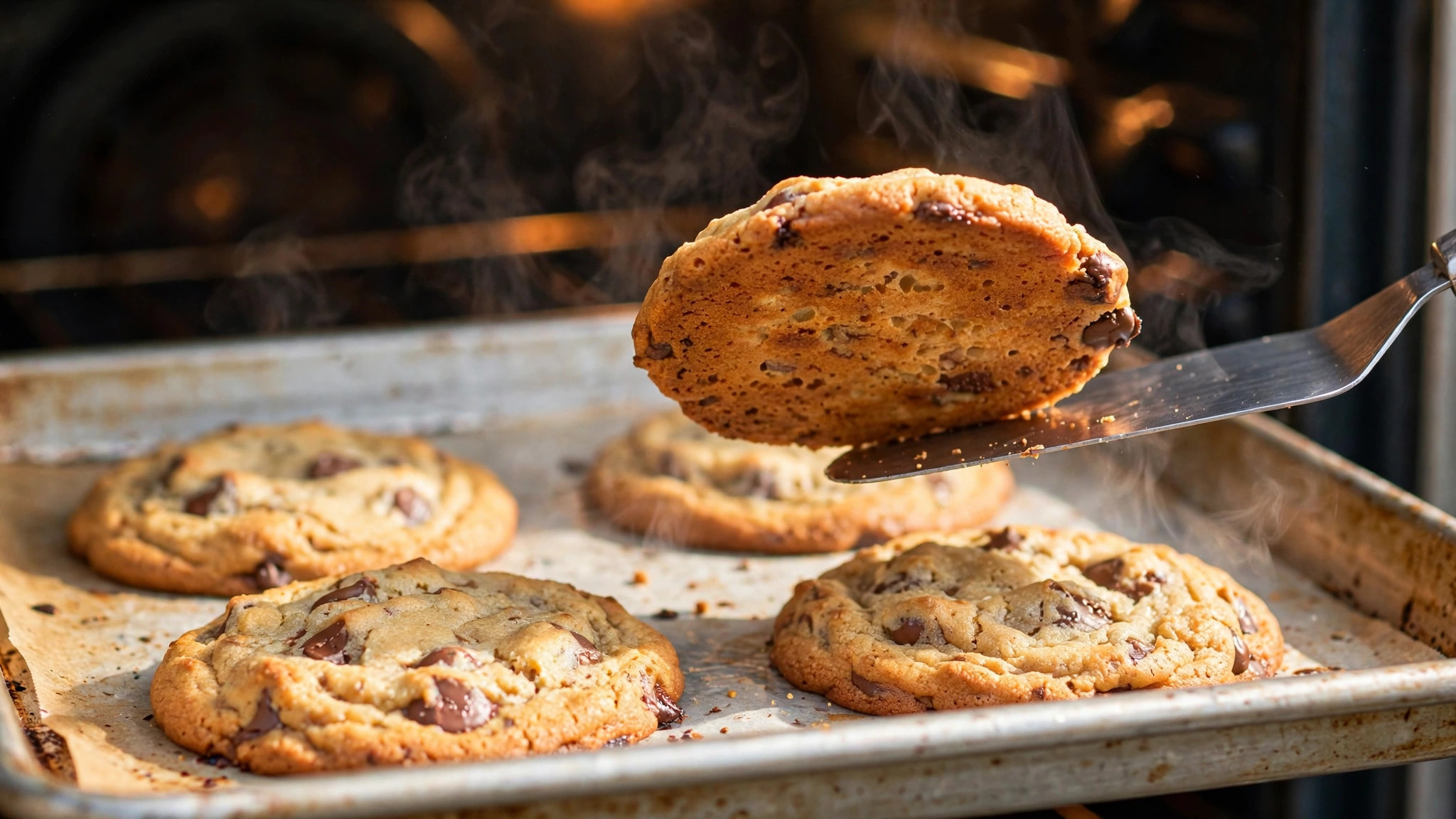
Quick rule of thumb: drop cookies and biscuits → parchment paper, always. Shaped or cut-out cookies → parchment, or a thin butter layer for extra crisp bottoms. Bar cookies and tray bakes → grease plus flour (or parchment with overhanging edges as a sling). Savoury sheet-pan bakes like flatbreads or chapli kebab → a thin film of oil. And when a recipe explicitly says "ungreased cookie sheet," believe it — those doughs are engineered to release on their own. Master how to grease a cookie sheet and you'll never lose another batch to the pan; pair the skill with simple bakes from our 10-ingredient recipes, or save the sheet pan for dinner with our 25 dinner ideas.