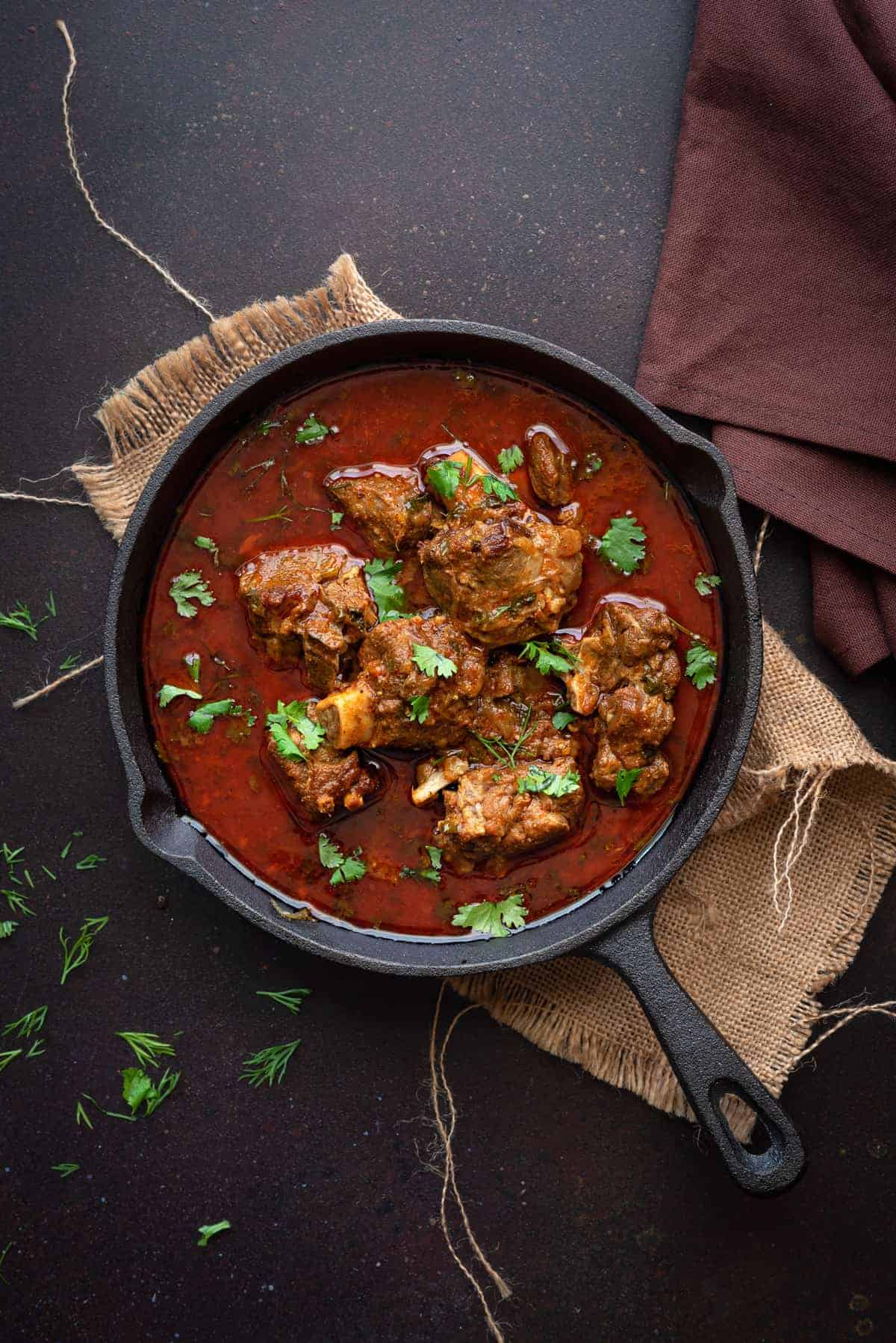

Every Pakistani cook knows the disappointment of a beef salan that tastes wonderful but chews like rubber. Tough beef is the most common complaint about homemade beef curry — and the fix is rarely "cook it longer and hope". Learning how to make beef curry tender is about understanding which cut you bought, how you treat it before cooking, and how you cook it. Get these three things right and your beef will turn meltingly soft every time.
Why is my beef curry tough?
Beef becomes tough for three reasons: the wrong cut, too little time, or the wrong kind of heat. Muscles that work hard (like leg/shank) are full of connective tissue; they need long, slow, moist cooking to convert that tissue into silky gelatine. Lean, quick-cooking cuts turn dry and stringy if simmered for hours. And fierce boiling tightens meat fibres, squeezing out juices — gentle simmering relaxes them. Toughness is almost never the meat's fault; it is a mismatch between cut and method.
Step 1: Choose the right cut
For curries, ask your butcher for boneless beef from the shoulder (chuck), shank (daast) or leg — cuts with some connective tissue and a little fat. These become spoon-tender with slow cooking and enrich the gravy. Avoid very lean cuts like undercut/fillet for long-simmered salan; they are better for quick karahi-style cooking. Bone-in pieces add tremendous flavour to the gravy, so consider a mix of bone-in and boneless. Cut the meat into even, generous chunks (about 4–5cm) — small pieces dry out, and uneven pieces cook unevenly.
Step 2: Marinate for tenderness and flavour
Marination is where tenderness begins. A yoghurt-based marinade is the classic choice: the mild acidity gently loosens the meat's surface fibres while the yoghurt carries spices deep inside. Coat the beef with whisked yoghurt, salt, ginger-garlic paste and your ground spices, and rest it for at least 1–2 hours in the fridge — overnight is even better. A tablespoon of raw papaya paste (kacha papita) is the traditional desi tenderiser used by restaurants; it contains enzymes that break down tough fibres, but use it sparingly (a teaspoon per kilo) and do not marinate longer than a couple of hours, or the meat can turn mushy.
Step 3: Brown properly, then go low and slow
Brown the marinated beef in hot oil in batches before adding liquids — this builds deep flavour through caramelisation. Then add your masala base and water, bring to a boil, and immediately reduce to the gentlest simmer, with the lid slightly ajar. Tough cuts typically need 1.5 to 2.5 hours of patient simmering. The beef is done when a piece yields easily to a spoon and the gravy has thickened around it. Rushing this stage with a rolling boil is the fastest way to tough, shrunken meat.
Step 4: Use the pressure cooker wisely
A pressure cooker is a weeknight lifesaver for beef curry. After browning and adding liquids, cook bone-in beef for roughly 20–25 minutes at pressure (slightly less for boneless), then release naturally for 10 minutes before opening. Natural release matters — a sudden quick release can toughen the meat's exterior. Finish by simmering uncovered for 10–15 minutes to thicken the gravy and let the flavours settle. The result rivals hours of slow cooking.
Step 5: Rest before serving
Like all braised meats, beef curry improves with a short rest. Take the pot off the heat and let it stand, covered, for 15–20 minutes before serving. The fibres relax and reabsorb juices, the gravy's flavours meld, and the texture becomes noticeably more tender. Beef salan reheated the next day is famously even better — the overnight rest in gravy finishes the tenderising.
Common mistakes that keep beef tough
Adding cold water to a simmering curry shocks the meat and tightens it — always add hot water. Salting only at the very end is fine, but the meat itself benefits from salt in the marinade. Stirring constantly breaks the pieces; stir gently and occasionally. And never skip the browning: boiled-from-raw beef tastes flat and looks grey, no matter how long you cook it.
Frequently asked questions
Can I tenderise beef with meat tenderiser powder?
Commercial tenderiser powders work, but they are easy to overdo and can give the meat an odd texture. The yoghurt marinade plus slow cooking described above gives better, more natural results for curry.
Why is my beef still tough after 2 hours?
Either the cut needs more time (shank can take 3 hours on the stovetop), or the heat was too fierce. Drop to a bare simmer and give it another 30–45 minutes — connective tissue dissolves with time, not temperature.
Is beef or mutton better for curry?
Both are excellent; mutton (goat) is traditional and becomes tender faster, while beef gives a richer gravy and is more economical. The techniques in this guide work for both.
Tender beef curry is not about secret ingredients — it is about respecting the cut, marinating with intent, and giving the pot the time it needs. Master that, and rubbery salan becomes a distant memory.