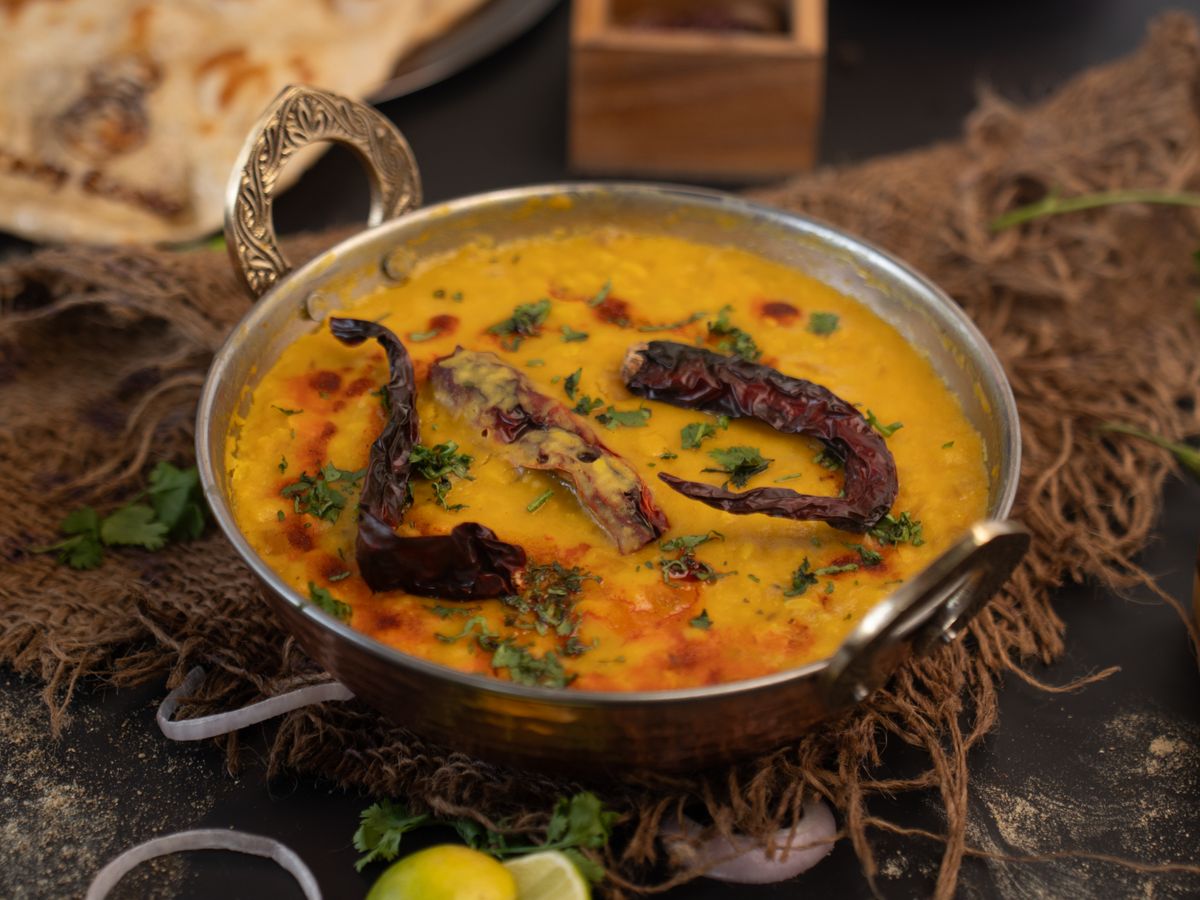
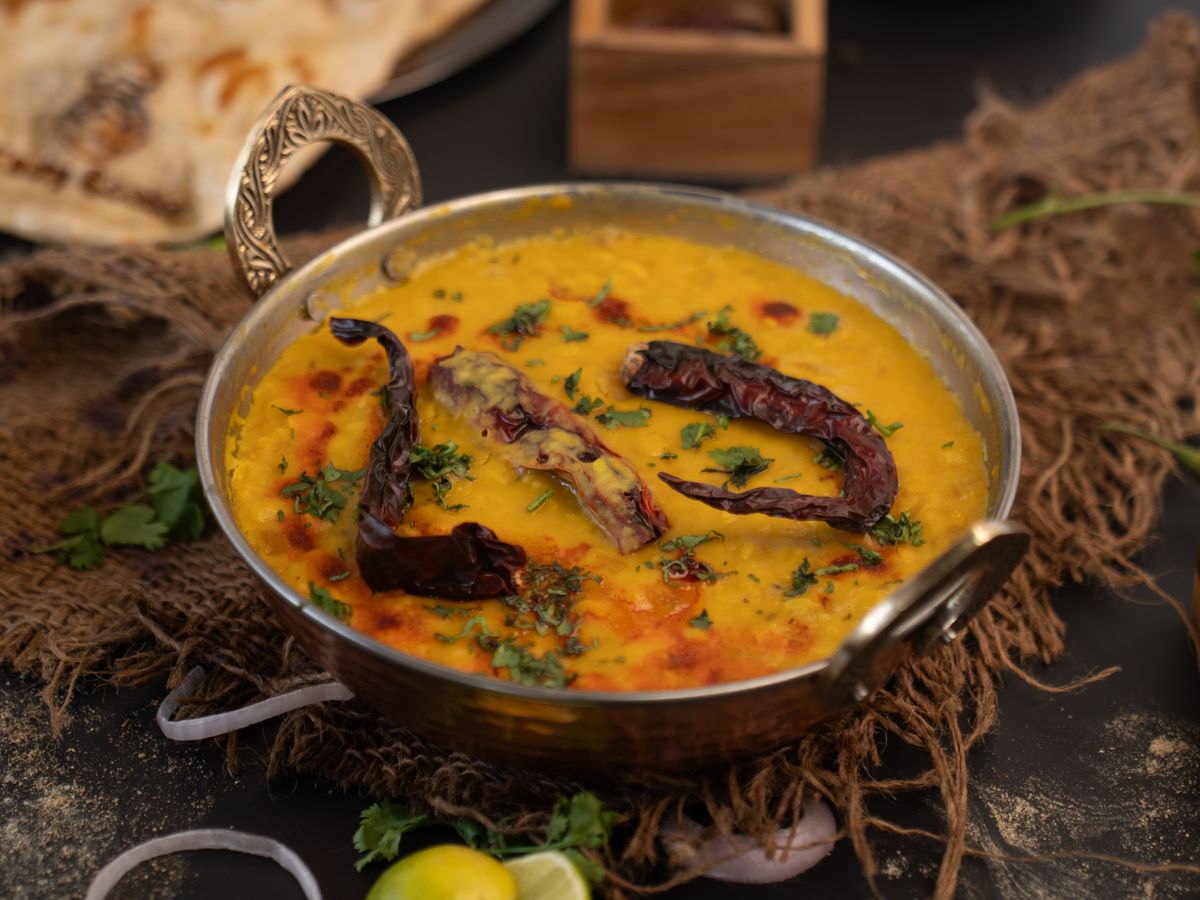
There is daal, and then there is dhaba daal — smoky, rich, slicked with ghee and topped with a sizzling tadka that hits you with aroma before the bowl even reaches the table. The good news is that the dhaba magic is not mysterious. It comes down to the right dal blend, a slow cook, and a fearless hand with ghee and garlic. Here is how to make dhaba-style daal fry at home.
What Makes Dhaba Daal Different?
Home daal is usually a simple single-lentil affair, lightly tempered. Dhaba daal fry uses a mix of dals for body, cooks them until completely creamy, and finishes with a bold double tadka — spices bloomed in generous ghee, often with browned garlic and dried red chillies. Dhabas also cook in bulk, which means longer simmering and deeper flavour. We will replicate all of that in a home kitchen.
The Right Dal Mix
Dhabas rarely use a single dal. The classic dhaba mix is roughly: 1/2 cup toor dal (arhar), 1/4 cup masoor dal (red lentils) and 1/4 cup chana dal. The toor gives body, the masoor melts into creaminess, and the chana adds texture. Rinse well, soak the chana dal portion for 30 minutes, then pressure-cook everything with turmeric and salt until completely soft — about 4–5 whistles. Whisk the cooked dal until smooth and creamy.
5 Dhaba Secrets for Daal Fry
1. The double tadka
This is the heart of dhaba flavour. The first tadka goes into the dal while it simmers: ghee, cumin seeds, chopped onion, ginger-garlic paste, tomatoes and powdered spices, cooked until the oil separates. The second tadka is poured over the served dal at the table: smoking-hot ghee with sliced garlic (fried golden), dried red chillies, cumin and a pinch of asafoetida. That final sizzle is pure theatre — and flavour.
2. Be generous with ghee
Dhabas do not skimp, and neither should you. Ghee carries the spices and gives daal fry its signature richness. Use at least 3–4 tablespoons across the two tadkas for 1 cup of dry dal mix.
3. Brown the garlic properly
Thinly sliced garlic fried to a deep golden brown (not burnt) in the final tadka is the defining dhaba aroma. Keep the slices even so they colour at the same rate, and pull them off the heat just before they look done — they keep cooking in the hot ghee.
4. Simmer the dal low and long
After the first tadka, let the dal bubble gently for 15–20 minutes. This marrying time melds the flavours and thickens the dal to the perfect coating consistency. Add hot water to adjust — dhaba dal should flow slowly off the spoon, not sit like porridge.
5. Finish with smoke (optional but brilliant)
For the authentic roadside touch, try the dhungar method: heat a small piece of charcoal until red-hot, place it in a small steel bowl set on the dal, drizzle with ghee, and cover the pot for 2–3 minutes. The trapped smoke perfumes the dal exactly like a dhaba kitchen.
Serving Dhaba Daal Fry
Serve bubbling hot in bowls, with the second tadka poured over at the last second. Classic accompaniments: tandoori roti or naan, sliced raw onions, green chillies and lemon wedges. A dollop of white butter on top is the true dhaba finish.
FAQs
Can I make dhaba daal fry without a pressure cooker?
Yes — simmer the soaked dals in a heavy pot for 45–60 minutes until completely soft. It takes longer but the result is just as creamy.
Why does my daal fry taste flat?
Usually under-salting or a timid tadka. Dal needs assertive seasoning — taste and adjust salt at the end, and do not hold back on the ghee, garlic and chillies in the tempering.