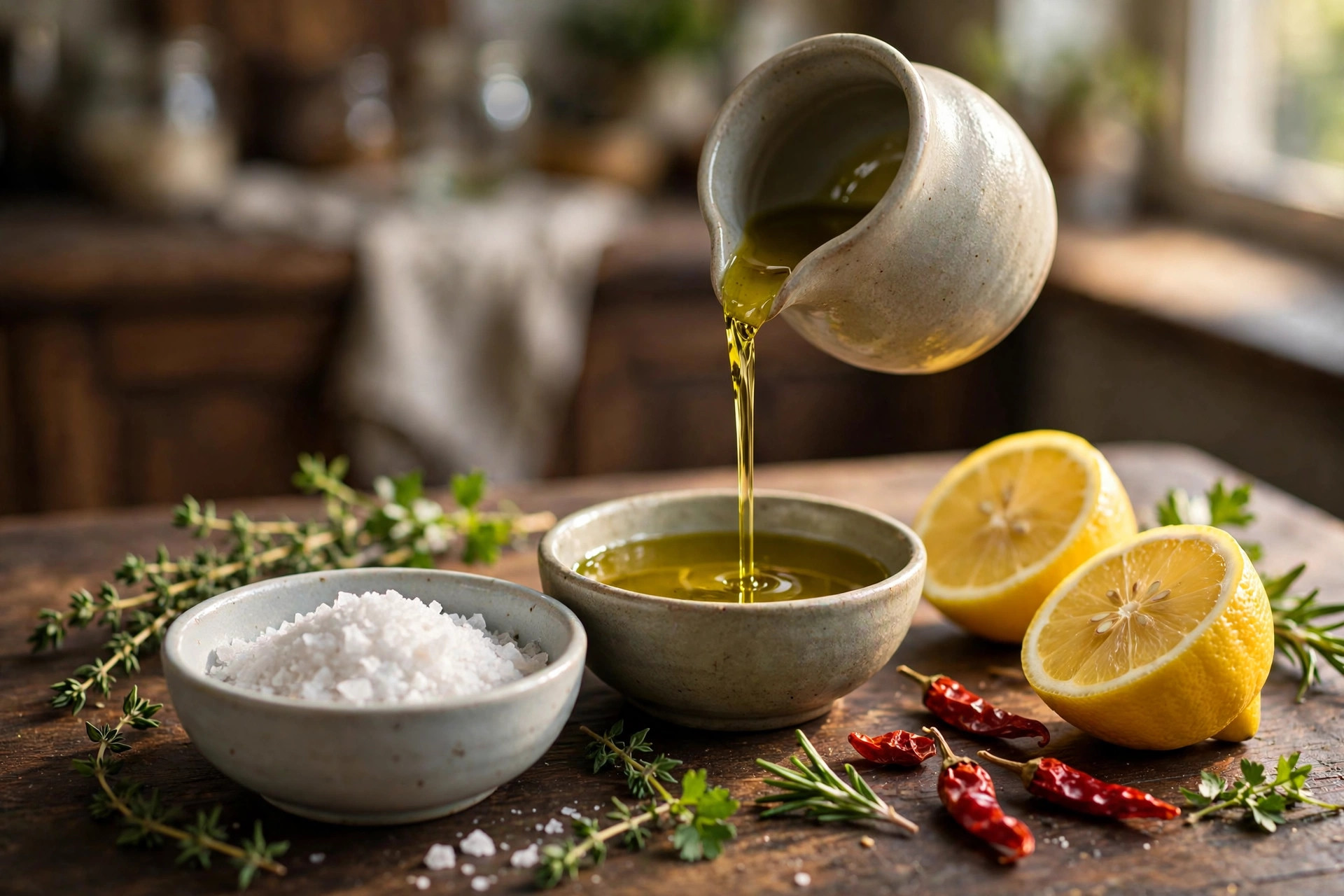
Mastering the elements of good cooking doesn't require culinary school — it requires understanding four ideas that professional chefs use every single day: salt, fat, acid, and heat. Popularised by chef Samin Nosrat in her celebrated book and series Salt, Fat, Acid, Heat, these four elements are the real reason restaurant food tastes the way it does. Once you can identify which element a dish is missing, you can fix almost any recipe without looking anything up. Here's what each element does and how to wield it in your own kitchen.
Element 1: salt — the flavour amplifier
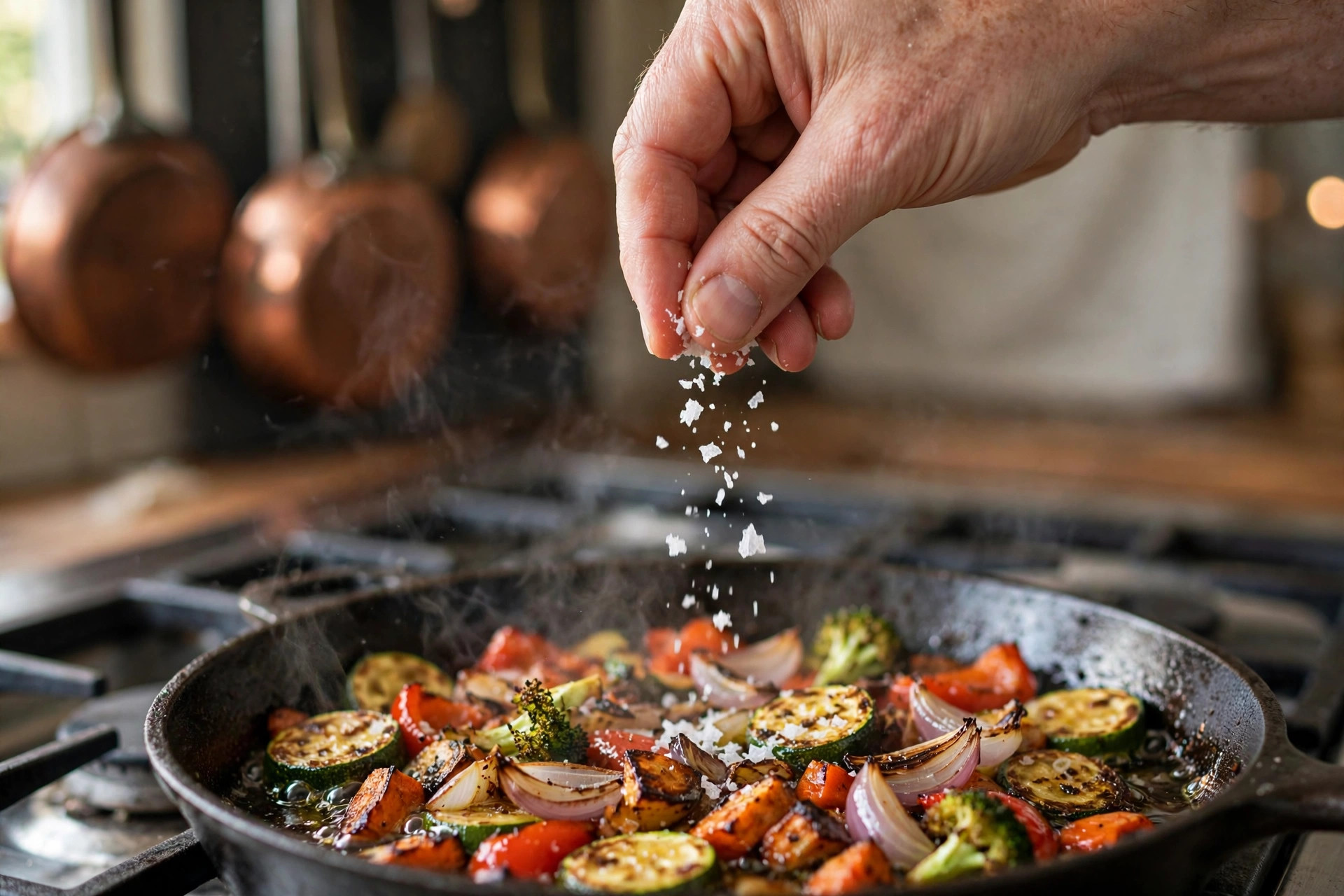
Salt doesn't just make food salty; it makes food taste more like itself. It unlocks aromatic compounds, suppresses bitterness, and sharpens every other flavour in the dish. The single biggest difference between home cooking and restaurant cooking is usually salting: professionals salt early, salt in layers, and — crucially — taste constantly. Salt pasta water until it tastes like the sea; season meat well before it hits the pan so the salt penetrates; and finish vegetables with a pinch of flaky salt for contrast. If a dish tastes flat or "like something's missing," the answer is almost always more salt — add it gradually and taste after each addition. Under-salting is the most common and most fixable mistake in home kitchens.
Element 2: fat — the flavour carrier
Fat carries flavour to your palate and creates the textures we crave: crisp, creamy, silky, golden. Butter, ghee, olive oil, coconut milk, and rendered chicken fat each bring their own character, so choosing the right fat is a flavour decision, not just a cooking-medium decision. This is why our chicken handi starts with ghee and cream rather than neutral oil — the fat is part of the flavour. Fat also moderates heat: it lets you brown food deeply without burning, and it mellows harsh spices. The classic error is fearing fat and ending up with dry, dull food; the fix is learning which fat suits which cuisine. Olive oil for Mediterranean dishes, ghee or mustard oil for desi cooking, butter for French-style sauces — match the fat to the dish's origins and the flavour foundation is already right.
Element 3: acid — the brightness button
Acid is the element most home cooks forget, and it's often the missing piece in rich, heavy, or one-note dishes. A squeeze of lemon, a splash of vinegar, a spoonful of yoghurt, or chopped tomatoes can lift an entire dish without making it taste sour — you shouldn't be able to identify the acid, only notice that everything tastes brighter. Think of the lemon wedge served with fried fish, the vinegar in a sharp salad dressing, or the tamarind in a curry: acid cuts through richness and wakes up your palate between bites. When a stew tastes heavy, a soup tastes dull, or a creamy curry like our layered chicken biryani needs its raita on the side, that's acid doing its job. Keep lemons, a good vinegar, and plain yoghurt permanently on hand and you'll reach for them constantly.
Element 4: heat — the texture transformer
Heat is about temperature, not chilli: it's what happens in the pan. High heat creates browning and crispness through caramelisation and the Maillard reaction — the deep, savoury flavours on seared meat, roast vegetables, and crusty bread. Low, slow heat does the opposite, coaxing tough cuts tender and melding flavours in curries and stews. Most home cooks under-heat their pans (steaming instead of searing) and overcrowd them, which drops the temperature further. Preheat properly, cook in batches, and learn the difference a ripping-hot pan makes to a stir-fry versus a gentle simmer for a dhal. Controlling heat confidently is what separates cooks who follow recipes from cooks who understand them.
Putting all four elements together tonight
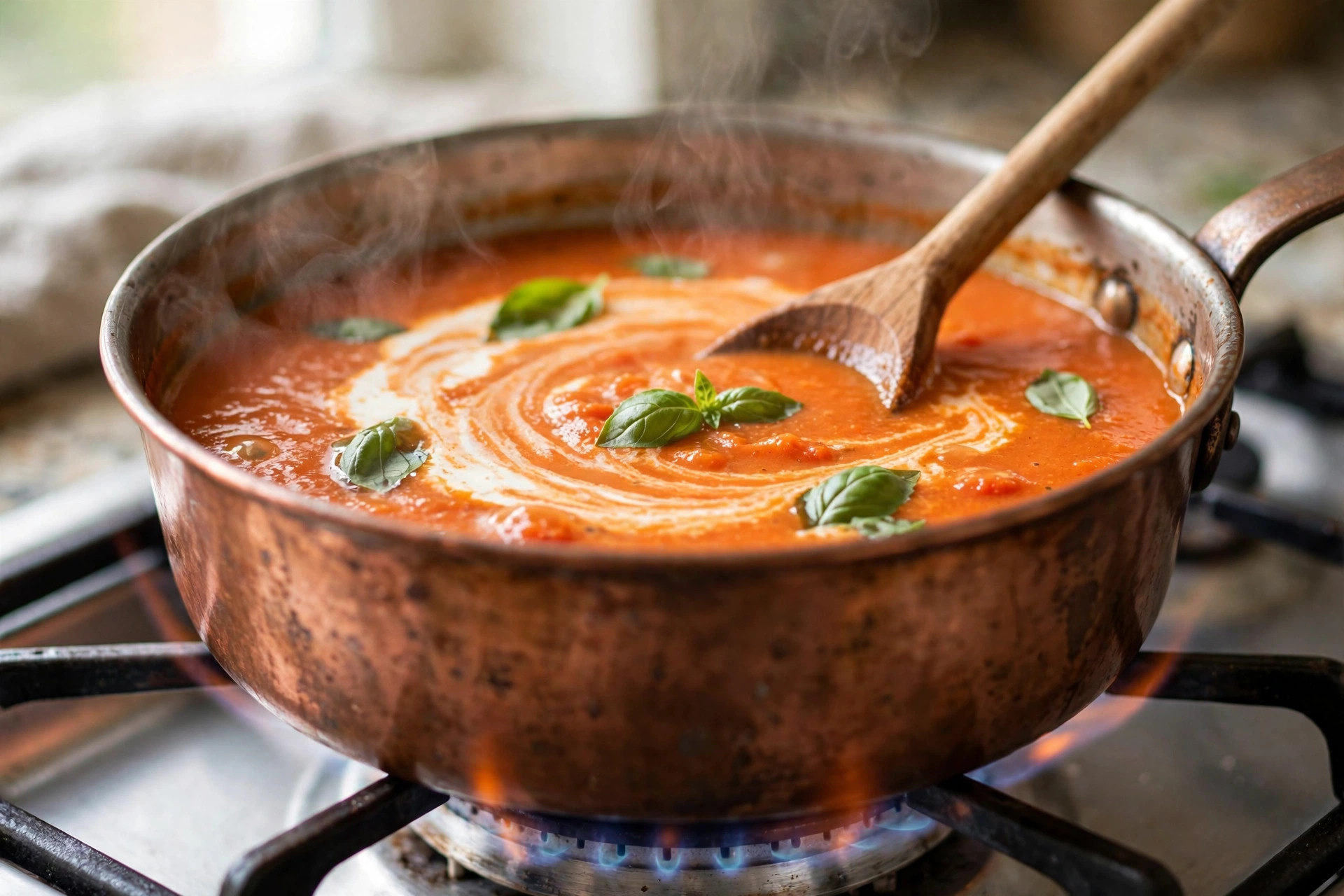
Here's the framework in action on a simple tomato soup: salt the onions as they soften so they season from within; cook them in butter for richness (fat); add a splash of vinegar or lemon at the end to brighten the tomatoes (acid); and roast the tomatoes first at high heat for caramelised depth (heat). Four decisions, one dramatically better soup — no new recipe required. Nosrat herself describes these four points as a compass for cooking without recipes, and in her interview on salt, fat, acid and heat she explains how tasting constantly — "taste and taste and taste again" — is the habit that ties them all together. Start applying the framework to the simple dishes you already make from our 10-ingredient recipes, and you'll feel the difference within a week. That's what mastering the elements of good cooking really means: not memorising recipes, but understanding why food tastes good.