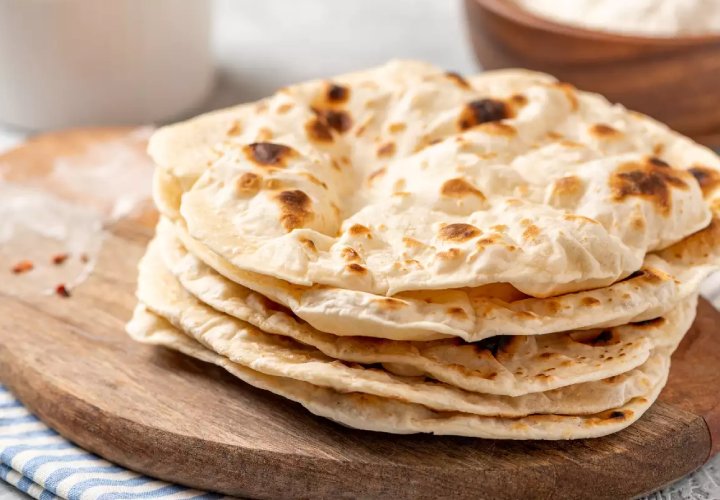

There is nothing more disappointing than sitting down to dinner and finding your rotis have turned hard, stiff and leathery. If you keep asking yourself, "why does my roti become hard?", you are not alone — it is one of the most common frustrations for home cooks. The good news is that hard rotis are almost never a mystery. They are caused by a handful of specific, fixable mistakes in the dough, the cooking or the storage. This guide walks through the nine most common reasons your roti becomes hard, with a practical fix for each one.
9 reasons your roti becomes hard
1. The dough is too stiff
This is the number one culprit. Roti dough should be soft, smooth and slightly tacky. If your dough feels stiff and firm, your rotis will turn out stiff and firm too. The fix is simple: add water gradually while kneading until the dough feels soft and pliable. Kneading in a teaspoon of oil or ghee per cup of flour at the end also keeps the dough supple and easier to roll.
2. You skipped the resting time
Freshly kneaded dough contains tight, tense gluten. If you roll and cook it immediately, the roti shrinks back and cooks up dense and hard. Resting the dough for at least 20 to 30 minutes, covered with a damp cloth, lets the gluten relax and the flour fully hydrate. Many experienced cooks rest their dough for a full hour when time allows, and the difference in softness is noticeable.
3. The tawa was not hot enough
A roti needs fierce, direct heat to puff. If the tawa is only moderately hot, the roti sits there slowly drying out instead of ballooning with steam, and you end up with a crisp, cracker-like disc. Heat your tawa over a medium-high flame until a sprinkle of water sizzles and evaporates within a second or two before laying the roti down.
4. You overcooked it
A roti cooks in under two minutes. Leaving it on the tawa too long drives out every bit of moisture. Cook the first side for about 30 seconds until small bubbles appear, flip it, cook the second side for another 30 to 45 seconds, then puff it for just a few seconds per side. Pale spots with light brown blisters are perfect; dark, widespread browning means it has gone too far and will harden as it cools.
5. Uneven rolling
If your roti is thick in the middle and paper-thin at the edges, the thin parts scorch and harden while the thick centre stays doughy. Aim for an even thickness of about 2mm throughout. Roll from the centre outwards, rotating the roti a quarter turn between rolls, and dust only lightly with dry flour — too much dry flour burns on the tawa and makes the surface rough and dry.
6. You did not let it puff
The puff is not just for show. When a roti balloons, steam separates its two layers, and that trapped steam is what keeps the roti soft as it cools. If your rotis never puff, press the edges lightly with a dry cloth or tongs when you flip it, and check the dough for cracks or holes that let steam escape. A well-rested, evenly rolled roti on a properly hot tawa should puff on its own.
7. You stacked them uncovered
Hot rotis release steam as they cool. Stack them in the open air and that moisture escapes, leaving each roti to dry into a frisbee. Always stack fresh rotis inside a clean kitchen towel or a cloth-lined hotpot, and keep them covered. The trapped steam keeps the whole stack soft for hours. A light smear of ghee on each roti before stacking helps even more.
8. The flour is old or unsuitable
Whole wheat atta loses its character with age. Flour that has sat open for months absorbs moisture and odours, and rotis made from it taste flat and harden faster. Buy atta in quantities you will use within a month or two, store it airtight, and use proper chapati atta rather than all-purpose flour, which lacks the bran and texture that give rotis their soft bite.
9. You stored the cooked rotis badly
Even a perfectly cooked roti will harden if refrigerated uncovered or left out overnight. Store leftover rotis in an airtight container at room temperature for up to a day, or in the fridge for two to three days. To revive them, sprinkle lightly with water and warm on a hot tawa for a few seconds per side — they soften right up.
A foolproof routine for soft rotis
Here is a simple routine to follow every time: knead a soft dough with lukewarm water, rest it covered for 30 minutes, roll it evenly, cook on a properly hot tawa for under two minutes in total, let each roti puff, and stack straight into a cloth-lined container. Follow that sequence and hard rotis become a thing of the past.
Frequently asked questions
Can I soften rotis that have already gone hard?
Yes, to a point. Sprinkle the hard roti with a little water and heat it on a hot tawa, or wrap it in a damp cloth and microwave for 15 to 20 seconds. It will not be as good as fresh, but it will be far more edible.
Does kneading with milk keep rotis soft?
Some cooks knead with warm milk instead of water for extra-soft rotis, and it does work — the fats and sugars in milk tenderise the crumb. But plain water with a well-rested dough gives excellent results too, so treat milk as an optional enrichment rather than a necessity.
Why do my rotis puff on the tawa but go flat and hard later?
That usually means they were slightly overcooked or cooled uncovered. The puff proves your technique is right — just shorten the cooking time a touch and get them into a covered container immediately after cooking.
Once you know what to look for, the question "why does my roti become hard?" answers itself. Fix the dough, respect the resting time, keep the heat high and the stack covered — and you will enjoy soft, puffy rotis every single time.