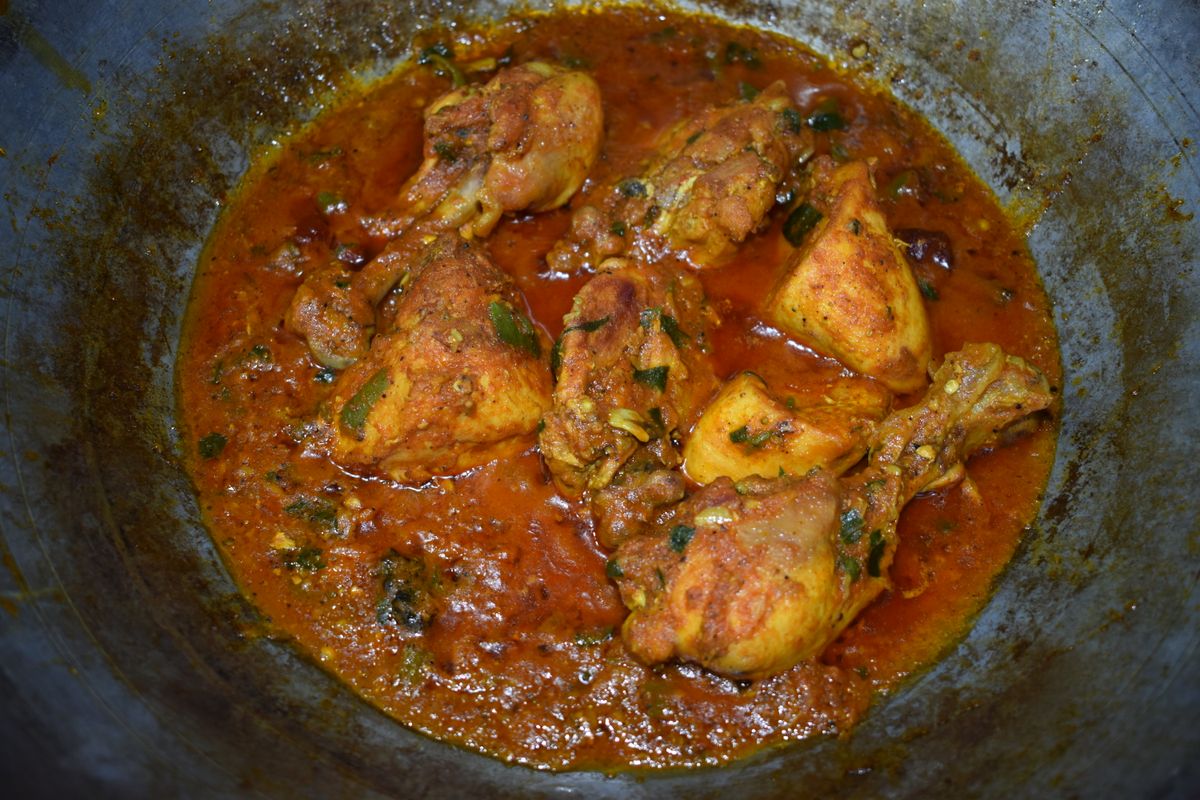
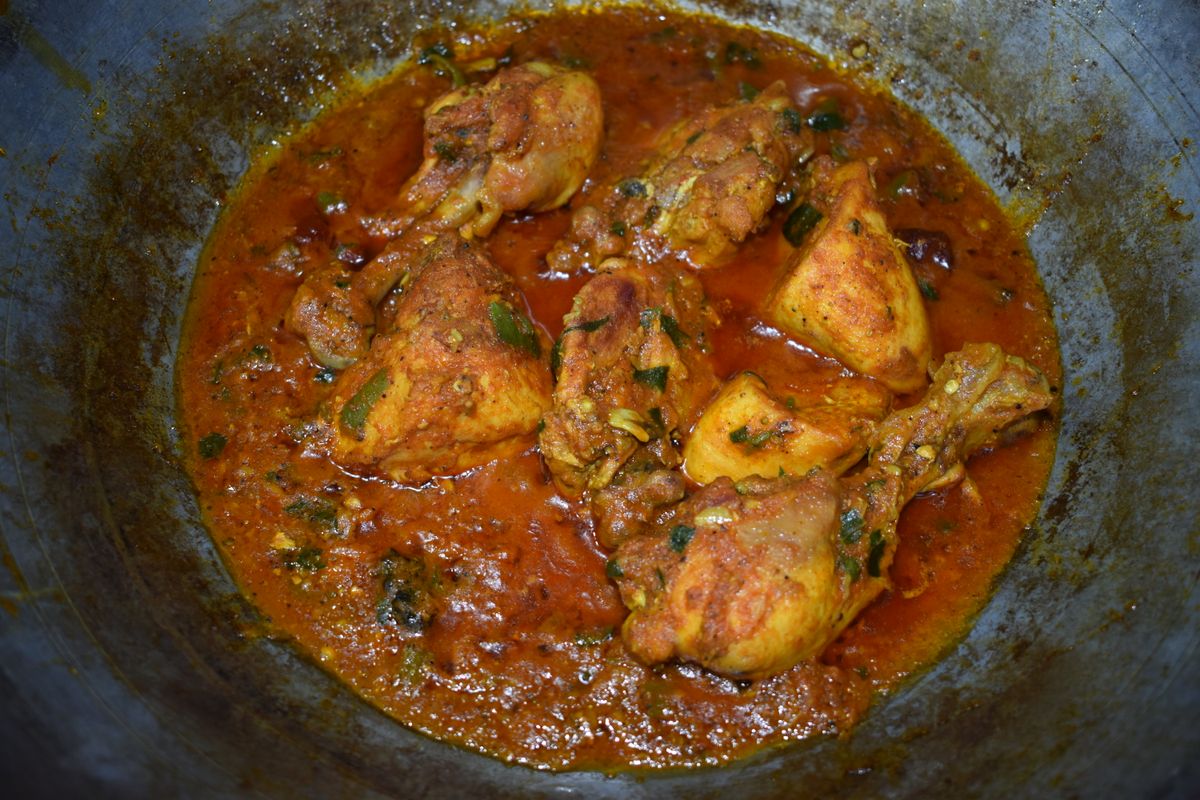
Real chicken karahi is bold and rustic — tender chicken clinging to a thick, glossy masala of tomatoes, ginger and green chillies, with oil glistening at the edges. If yours turns out watery and soupy instead, something in the technique needs adjusting. Here is why chicken karahi goes watery and exactly how to fix thin gravy.
Why Is My Chicken Karahi Watery?
Karahi gets its body almost entirely from tomatoes reduced down with the chicken — there is no onion gravy to hide behind. Wateriness usually comes from one of four things: watery tomatoes that never cooked down, added water that was never needed, a lid trapping steam and dripping it back in, or chicken that released its juices into a crowded, under-heated pan. Identify your culprit below.
How to Fix Watery Chicken Karahi
1. Cook the tomatoes down properly (bhunai)
This is the foundation. After adding chopped tomatoes, cook on medium-high heat, stirring, until they completely break down and the oil separates from the masala at the edges of the pan. If you rush this stage, raw tomato water stays in the gravy. Proper bhunai takes 8–10 minutes — do not skip it.
2. Stop adding water
Authentic karahi needs little to no added water — the chicken and tomatoes release plenty of liquid on their own. If your recipe calls for cups of water, that is likely the problem. Add water only in small splashes if the masala is catching, and let it cook off.
3. Cook uncovered on high heat
A lid traps steam, which condenses and drips back into the pan — the classic cause of thin karahi gravy. Once the chicken is mostly cooked, remove the lid and let the gravy reduce over medium-high heat, stirring so it does not stick. You will watch it thicken before your eyes.
4. Do not overcrowd the pan
Too much chicken in a small karahi drops the temperature and makes the meat steam in its own juices instead of frying in the masala. Use a wide pan and cook in batches if needed — the chicken should sizzle, not swim.
5. Use ripe, fleshy tomatoes
Pale, under-ripe tomatoes are mostly water. Use deep-red, ripe tomatoes (or good tinned tomatoes in winter), and consider adding a tablespoon of tomato paste to boost body quickly.
6. Finish with the karahi flourish
In the last 5 minutes, add julienned ginger, sliced green chillies and a knob of butter or a drizzle of cream. Then crank the heat for 2–3 minutes, tossing, until the gravy clings thickly to the chicken and oil shimmers at the edges. That glossy finish is the sign of a perfect karahi.
Quick Rescue for Already-Cooked Watery Karahi
If the karahi is already done and still thin: remove the chicken pieces to a plate, boil the gravy hard until reduced by a third, then return the chicken and simmer 5 minutes. Alternatively, mash a few pieces of tomato against the pan or stir in a tablespoon of tomato paste and cook it through. Both thicken without changing the flavour profile.
FAQs
Should chicken karahi have gravy at all?
Traditional Lahori-style karahi is nearly dry — a thick masala coating the chicken rather than a swimming gravy. If you prefer more sauce, reduce it until it is rich and clinging, never thin and watery.
Can I thicken karahi with cornflour?
Please do not — it gives a gloopy, unnatural texture and dulls the fresh tomato flavour. Reduction and proper bhunai are the authentic thickeners.